Air travel can be an exciting experience, but for many people it is also a major source of anxiety. Nervous flyers may worry about safety, crowds, unfamiliar processes or loss of control, while others experience broader anxiety linked to sensory overload, panic attacks or past negative experiences. In the UK, airports are increasingly recognising these challenges and have opportunities to do more to support anxious travellers, alongside steps individuals can take to manage their own wellbeing.
By Llinos Edwards
How UK Airports Can Support Nervous Travellers
Captain Tom Bunn, a former airline pilot and licensed therapist, has written extensively about fear of flying. He explains that the brain’s fear response can be triggered by unfamiliar sounds, turbulence or loss of control, even when no real danger exists. Captain Bunn argues that education, reassurance and emotional regulation techniques are more effective than simply trying to “stay calm”. His work reinforces the value of patient, well-informed airport staff and supportive environments for anxious travellers.
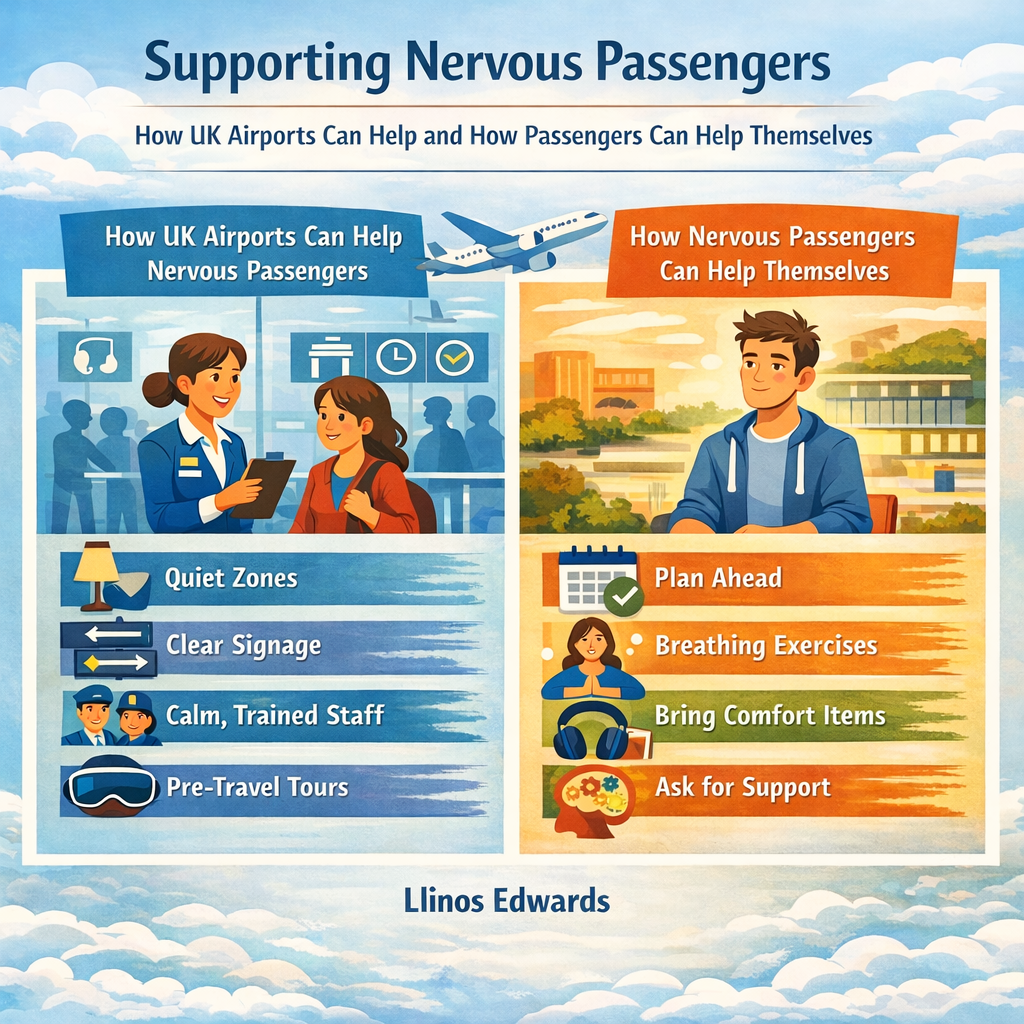
One of the most effective ways airports can help nervous travellers is by creating calmer, more predictable environments. Busy terminals, loud announcements and long queues can quickly overwhelm someone with anxiety. Clear signage, well-trained staff and simple explanations of processes such as security screening or boarding can significantly reduce stress.
- Provide clear signage, well-trained staff and simple explanations of security and boarding.
- Expand training so frontline workers understand anxiety and hidden disabilities, not just mobility needs.
- Offer quiet / sensory-friendly spaces where travellers can regulate emotions before boarding.
- Provide pre-travel familiarisation (videos, virtual walkthroughs, guided tours) so travellers know what to expect.
- Ensure staff are visible, approachable, flexible and patient as small accommodations can make a big difference.
How Nervous Travellers Can Help Themselves
While airports can and should provide better support, individuals with anxiety can also take steps to help themselves feel more in control when flying.
- Prepare: plan ahead, arrive early and understand procedures to reduce last-minute pressure.
- Manage physical symptoms: use grounding techniques, slow breathing and comfort items (headphones, music, book, familiar object).
- Ask for help: inform staff about anxiety (verbally or with a sunflower lanyard) so they can support appropriately.
- Consider professional support: fear-of-flying courses, CBT or GP advice can provide longer-term strategies.
- Celebrate small wins: acknowledge progress (security, boarding, take-off) to build confidence over time.
A Shared Responsibility
Supporting nervous travellers is a shared responsibility between airports, airlines and individuals. By creating more inclusive, compassionate environments and encouraging open conversations about anxiety, UK airports can make air travel more accessible for everyone. At the same time, with preparation, self-awareness and support, anxious travellers can take steps toward flying with greater confidence and comfort.