Living Between the Lines: An Honest Conversation With Andrew Edwards
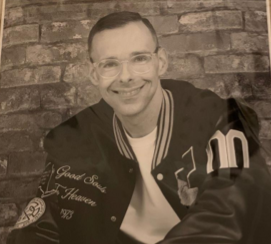
In this thoughtful and deeply personal interview, Andrew Edwards reflects on his journey as a person with autism, advocate, author and professional, sharing on the experiences that have shaped his voice, his resilience and his perspective over time. From early diagnosis to adulthood, he shares experiences that have shaped his perspective, offering important insight into understanding, inclusion, and the often-overlooked realities of living “in between.”
1. To start, could you tell us a bit about yourself and what inspired you to become an autism advocate, and how that journey has shaped your perspective over time?
I was diagnosed autistic at age four in April 1989. The specialist brutally told my late mother, Hazel Davies, upon diagnosing me to “Go home and watch Rain Man, which had won at The Academy Awards a matter before then. In all probability, your son will be institutionalised.”
Mum had to fight the system to get any support pretty much well into my adulthood. When I was a child, I was allegedly physically abused by staff at two different special schools by age eleven.
Additionally, I was tried in a failed placement at a local mainstream school that Mum had repeatedly warned the professionals wasn’t suitable for me. I was out of school on two occasions for a total of exactly two years from September 1994 to February 1998.
After finding a supportive environment in my last school, which Mum had to break into The Director of Education’s office to secure, I started to thrive.
I first started giving presentations/speeches in June 2002 as I thought that I had lived a mildly notable childhood with an ability to express it when few were doing so at that time.
My perspective regarding all this is that l the general public’s awareness of autism is infinitely better than when I was growing up. It is almost unrecognisable. The less said about “the system”, the better. I don’t even think Mum could help like she did then in the contemporary era.
2. You’ve written a book about autism - what’s the main message or feeling you hope readers take away after reading it?
The book is over a decade old now. What I wanted at the time was for it to be mine and my family’s individual story but for it to be realistic and relatable to the reader with my voice coming through within the text.
3. From your point of view, what could workplaces and communities do better to help people who are autistic feel more included and supported?
I have been very fortunate that the two paid, contracted jobs that I have been in were absolutely tremendous with me. There were undoubtedly travails along with the way but I have been extremely fortunate to have some great bosses.
In my instance, I would suggest being in regular contact/dialogue with my family to update on my progress but allow me to express myself, albeit in professional manner. Also, be kind, have great deal of patient, be easygoing, understanding and considerate that I will sometimes not process instructions initially due to my autistic brain.
4. Looking ahead, what are your hopes for the future of the autism community, especially when it comes to understanding, acceptance, and inclusion?
I think that there needs to be more understanding of those with autism, who are articulate, knowledgeable and intelligent but still require a good/big level of support. Additionally, that all that you see in front of you isn’t the full, day to day story as it more varied/complex than this.
I can answer these questions, undertake presentations, write three published books, be employed in two part-time jobs at different times in most of my adult life but not be able to tie my own shoelaces or undertake any basic, practical tasks that most people take for granted.
A lot of people can’t seem to comprehend this even some people that have known me a quarter of a century.
Also, there seems to be no recognition of the in between those with autism who have academic learning disabilities and those who lead “independent” lives. I am in the in between who has the ability to come across as intelligent and articulate but requires constant family support.
These tend be the ones who have the most difficulty in getting into romantic relationships or have a limited pool of potential paid jobs they can undertake. There is a very small, finite number of employers that I could realistically work for part-time as I can only work eight hours a week but require a very caring, progressive environment. I most certainly couldn’t work any more hours than this as it would put too much strain on my autism and mental health.
Finally, please don’t call me “inspirational” or seriously and unironically term autism “a super power”. In my opinion, it is very infantilising. This is whilst undermining that I just would like understanding, equality, respect, does patience and kindness like everyone else regardless of their life circumstances.
Andrew’s reflections move beyond simplistic narratives and easy labels. His experiences illuminate the often-overlooked complexity of living with autism, particularly for those who exist in the “in between” space that doesn’t fit neatly into common stereotypes. Above all, what comes through is not a desire for praise or tokenistic recognition, but for something far more meaningful and universal: genuine understanding, equality, respect, patience and kindness.
Learn more:
To learn more about Andrew’s work, advocacy, and speaking engagements, visit his website:
You can also find details about his book I’ve Got A Stat For You here:
To learn more about Andrew’s work, advocacy, and speaking engagements, visit his website: andrewedwardsautism.co.uk.
You can also find details about his book I’ve Got A Stat For You here: andrewedwardsautism.co.uk/ive-got-a-stat-for-you.